
Tag: Political unit > United Nations - (71)
Showing 71 Results

The UN Democracy Fund supports civil society projects around the world that strengthen the voice of civil society, promote human rights, and encourage the participation of all groups in democratic processes.
[A]n urgent call for action by all countries - developed and developing - in a global partnership
Welcome to SparkBlue, a platform for development practitioners to exchange knowledge, share expertise, engage with peers, and help shape a knowledge base to drive solutions for sustainable development.
Since 2001, the United Nations E-Government Survey has provided a comprehensive assessment of the digital government landscape across all 193 Member States.
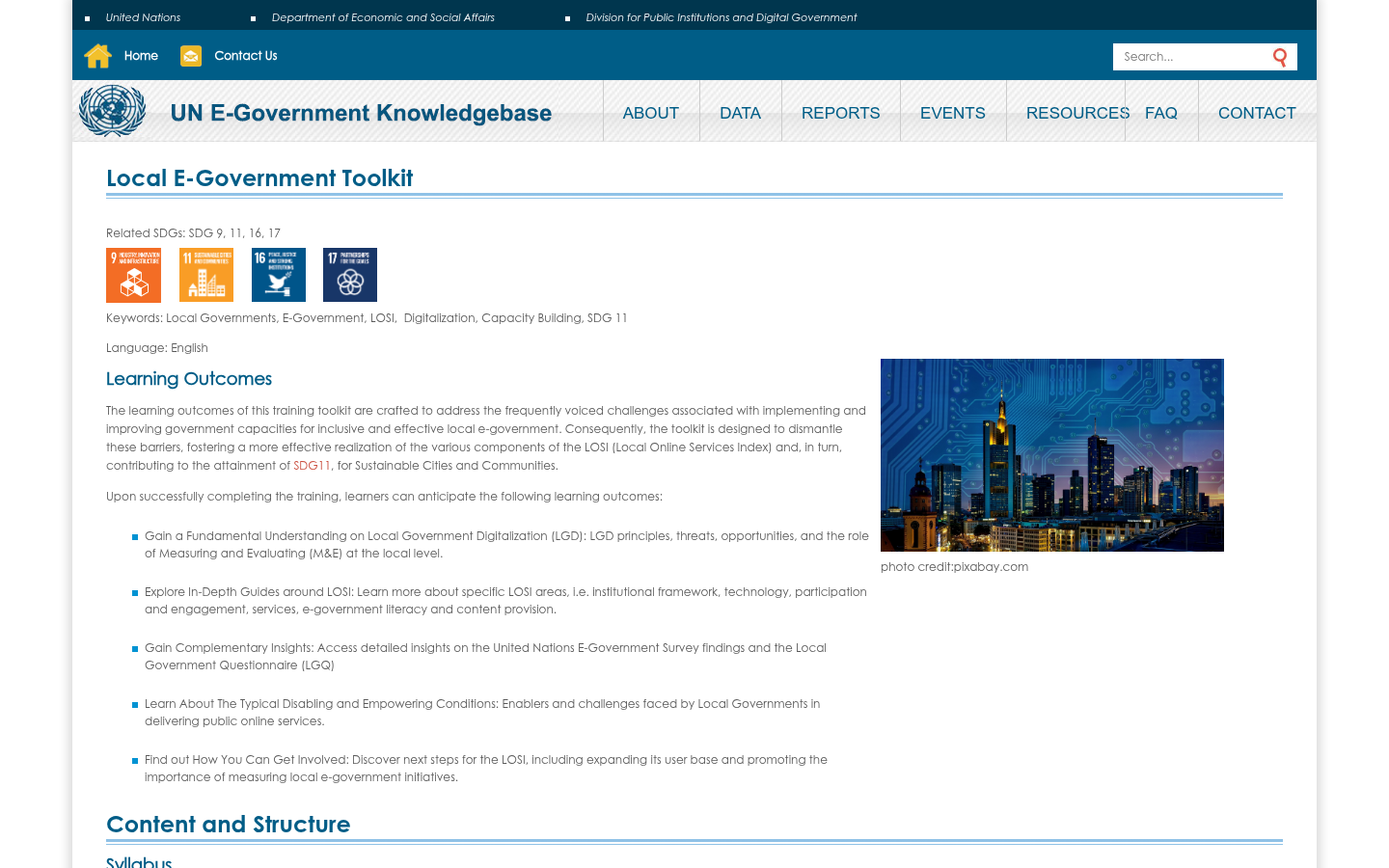
The learning outcomes of this training toolkit are crafted to address the frequently voiced challenges associated with implementing and improving government capacities for inclusive and effective local e-government.
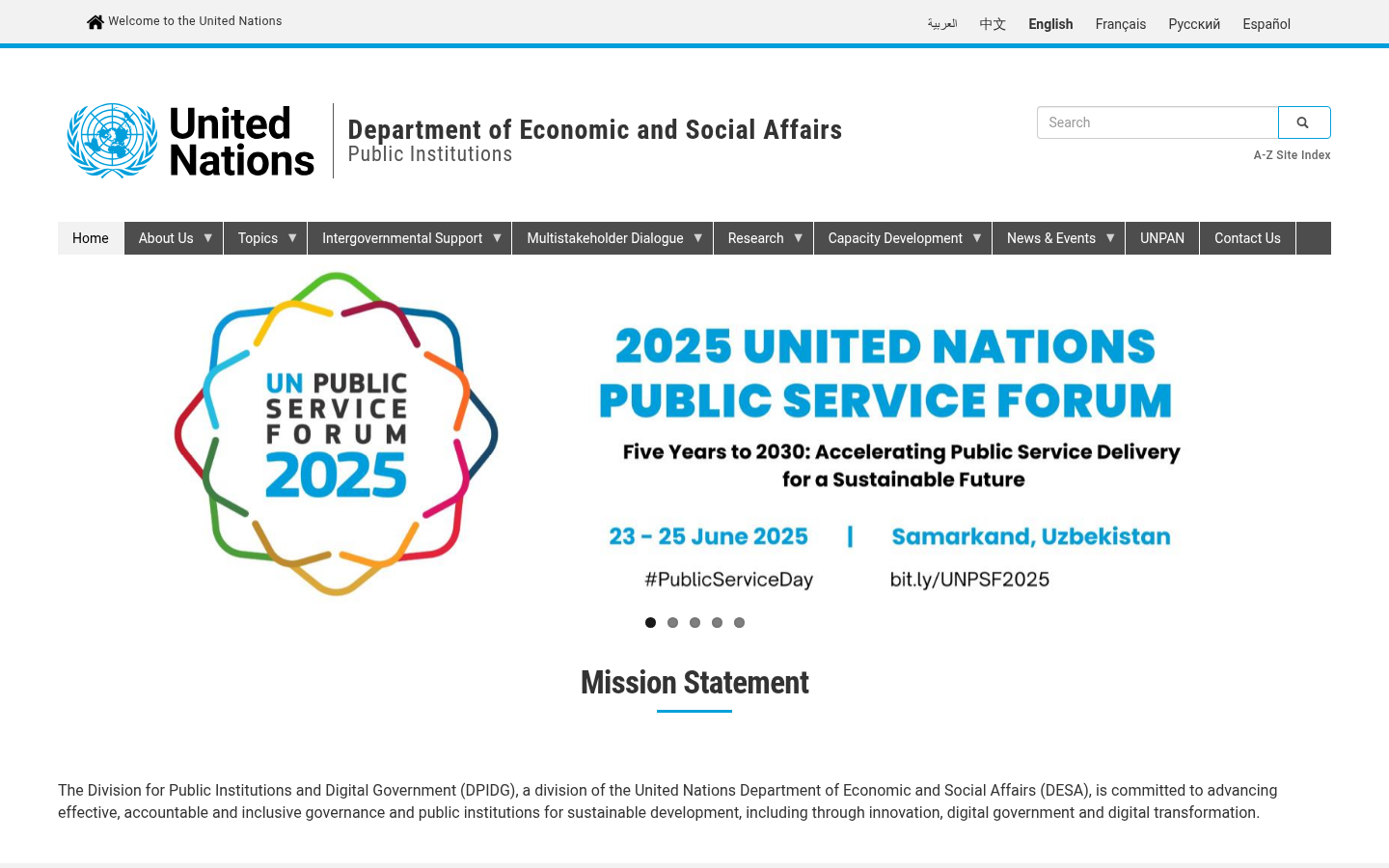
The Division for Public Institutions and Digital Government (DPIDG), a division of the United Nations Department of Economic and Social Affairs (DESA), is committed to advancing effective, accountable and inclusive governance and public institutions for sustainable development, including through innovation, digital government and digital transformation.
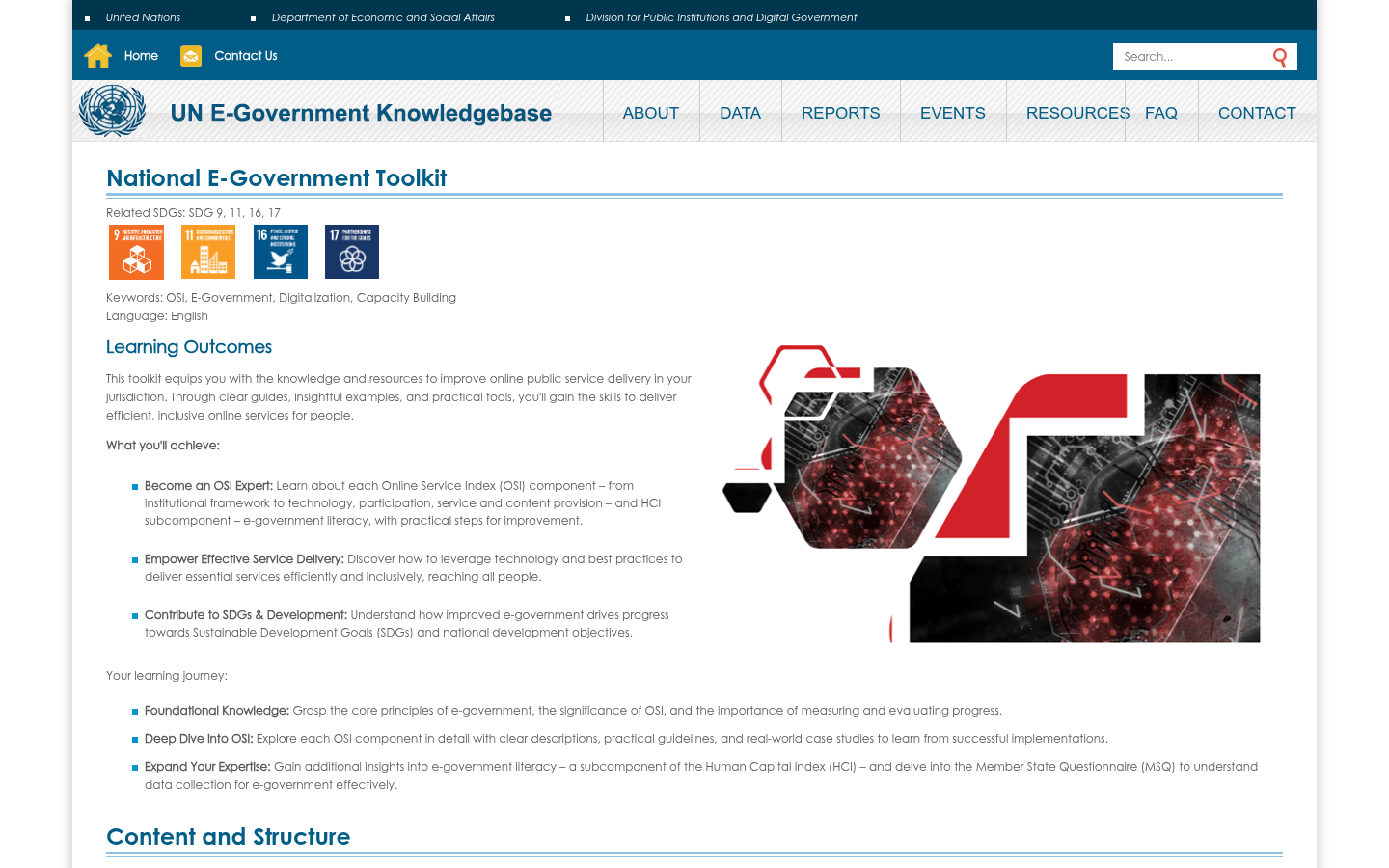
The learning outcomes of this training toolkit are crafted to address the frequently voiced challenges associated with implementing and improving government capacities for inclusive and effective local e-government.

The United Nations E-Government Knowledgebase (UN-EgovKB) is a benchmarking tool that provides a comparative assessment of the e-government development of UN Member States.

The UN Public Service Day intends to celebrate the value and virtue of public service to the community; highlight the contribution of public service in the development process; recognize the work of public servants, and encourage young people to pursue careers in the public sector.

Trinidad and Tobago Open Source Program Office
Trinidad and Tobago 🇹🇹This pilot, in collaboration with The University of the West Indies, and UNDP, is...a model for how open-source practices can strengthen digital ecosystems and drive inclusive innovation across the region.

ITU Open Source Programme Office
Geneva, SwitzerlandITU Open Source Programme Office (OSPO) is committed to harnessing the power of open-source technologies to empower nations, organizations, and individuals to leverage cutting-edge digital solutions for the sustainable development.

Open Source Ecosystem Enabler (OSEE)
Geneva, SwitzerlandThe Open Source Ecosystem Enabler project seeks to empower local and regional public and private actors to effectively adopt open source technologies for delivering digital government services.
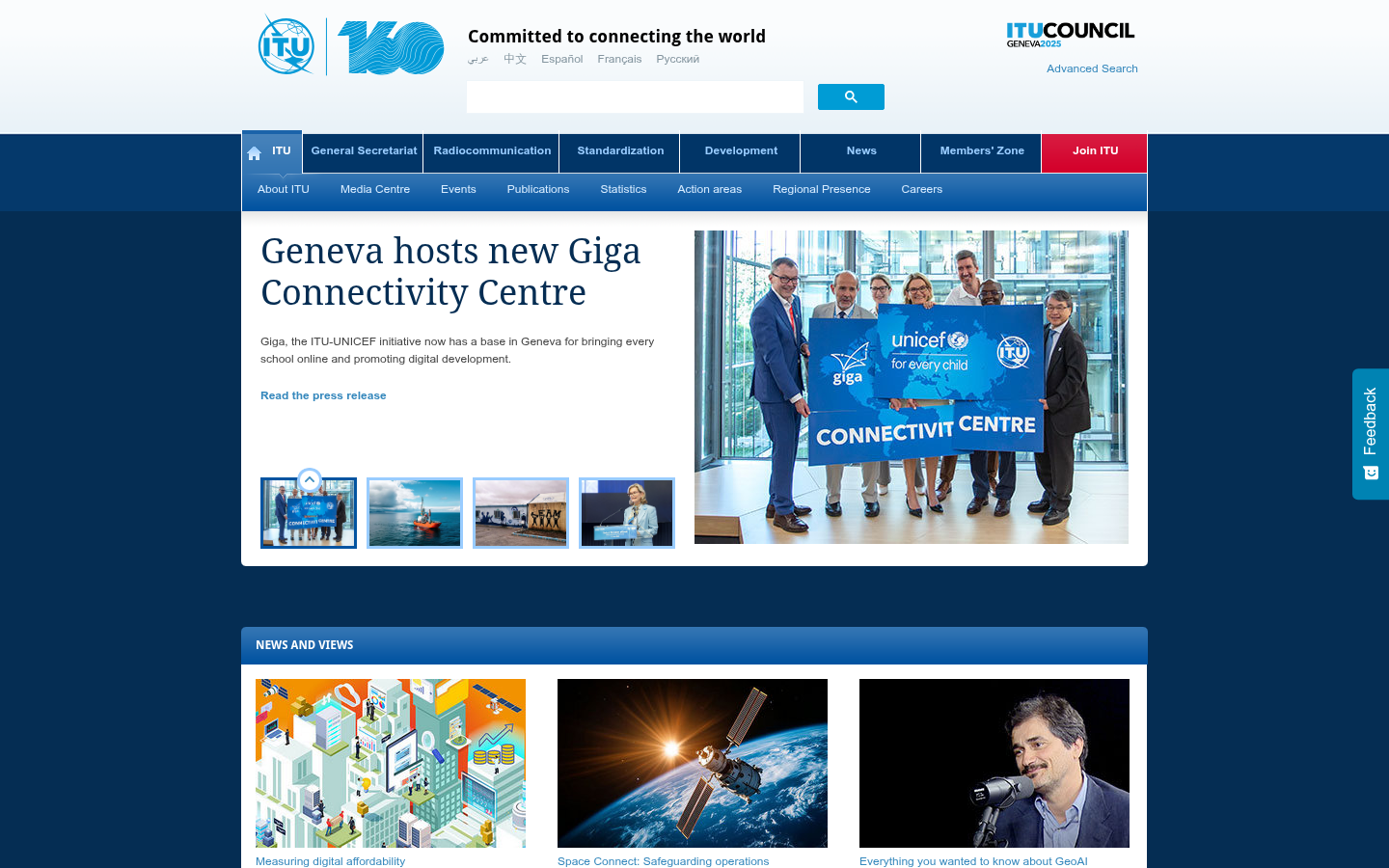
International Telecommunication Union (ITU)
Geneva, SwitzerlandITU is the United Nations specialized agency for digital technologies (ICTs).

Open-Source AI for Public Services (ITU AI)
Geneva, SwitzerlandThe International Telecommunication Union (ITU)-led multi-stakeholder initiative on Open-Source Generative AI for Public Services aims to develop an end-to-end, open-source implementation framework that enables public sector stakeholders to easily build and deploy their own GenAI solutions using modular, open-source software blueprints.

The DPI Approach: A Playbook
India (Bhārat) 🇮🇳This DPI playbook is designed as a practical and public resource that low and middle-income countries (LMICs) in particular can utilize in building an inclusive and rights-based DPI.

OCHA carried out two global survey to assess the consequences of the US funding freeze on humanitarian action globally. The first round, in February, looked at the impact of the suspension orders and waivers. The second was launched in March following the announcement of the US grants’ termination, in collaboration with IOM, UNHCR and ICVA.

Humanitarian Action provides a comprehensive overview of the humanitarian landscape by providing both an annual snapshot complemented by analysis, and live data on on humanitarian crises and response.

Agora Citizen Network
France 🇫🇷Where citizens converge to exchange and debate ideas. Let’s turn our differences into progress, rather than conflict.

Framework for Conducting National Dialogues on Frontier Technologies
New York City (NYC / New York, NY)A key question is: who gets a say in the direction AI and other frontier technologies go?

The E-Government Development Index presents the state of E-Government Development of the United Nations Member States.

A country’s EPI reflects the e-participation mechanisms that are deployed by the government as compared to all other countries.

UNDP Panama Accelerator Lab
Panama City, PanamaPanama’s Accelerator Lab is working to understand how strengthening solid waste management practices in rural municipalities can help create pathways to optimize national recycling strategies and work towards a circular economy.

United Nations University Operating Unit on Policy-driven Electronic Governance (UNU-EGOV)
Guimarães, PortugalAs a forward-thinking policy-oriented entity, we lead innovation, actively exploring and advocating emerging technologies to transform public service delivery on a worldwide scale.

Portugal Digital Fellowship at United Nations University
Guimarães, PortugalThe envisaged participants of this Capacity Building Programme are high-level officials from developing countries.



Chief Digital Office at UNDP
Geneva, SwitzerlandThe Chief Digital Office (CDO) was created in 2019 to enable, accelerate and promote digital transformation within UNDP and throughout its programmatic work.
The aim of the UN World Data Forum is to spur data innovation, nurture partnerships, mobilize high-level political and financial support for data, and build a pathway to better data for sustainable development.
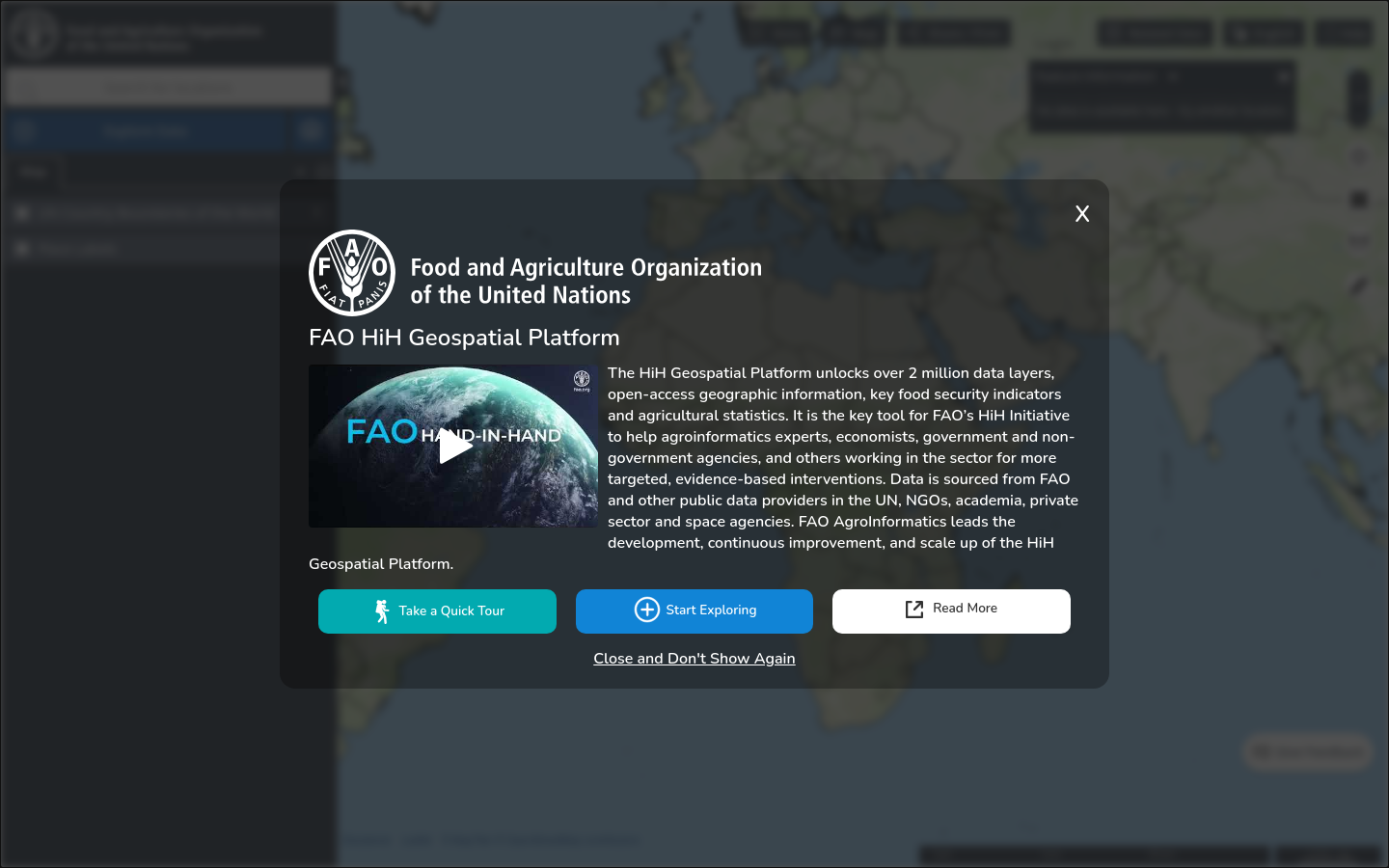
The Hand-in-Hand (HiH) Geospatial Platform is the enabling tool for the HiH Initiative unlocking over 2 million data layers for more targeted, evidence-based interventions.

Innovating public service delivery through Digital Public Goods and Open Source
Geneva, SwitzerlandFree online course at ITU Academy funded by the EU

"The United Nations General Assembly resolved to observe 15 September as the International Day of Democracy—with the purpose of promoting and upholding the principles of democracy" - Wikipedia
To help build a better future for refugees, UNHCR’s chat services suit their preferences, meet their needs, and safeguard their data


A powerful visual testimonial of the costs of Russia's war on Ukrainian children, by UNICEF

The United Nations Institute for Training and Research (UNITAR) provides innovative learning solutions to individuals, organizations and institutions

The State of Open Humanitarian Data 2024
Humanity Hub, Fluwelen Burgwal, The Hague, NetherlandsA ten-year anniversary retrospective on the Humanitarian Data Exchange, which was accessed by 1.4 million people in 230 countries to download 2.7 million open humanitarian datasets in 2023.

The 2019 Global Multidimensional Poverty Index (MPI) data and publication "Illuminating Inequalities" released on 11 July 2019 shed light on the number of people experiencing poverty at regional, national and subnational levels, and reveal inequalities across countries and among the poor themselves.


Humanitarian ID
New York City (NYC / New York, NY)Humanitarian ID is an authentication service managed by the United Nations Office for the Coordination of Humanitarian Affairs (UNOCHA).

ReliefWeb
New York City (NYC / New York, NY)Informing humanitarians worldwide

UN-OCHA's Peer-2-Peer (P2P) Support Project is a tool of the Inter-Agency Standing Committee (IASC)

UN HABITAT Digital Cities Toolkit
58 Victoria EmbankmentAn open source Policy Toolkit for cities to develop digital policies that put citizens at the center, tackle Sustainable Development Goals and make Governments more open, transparent, and collaborative.
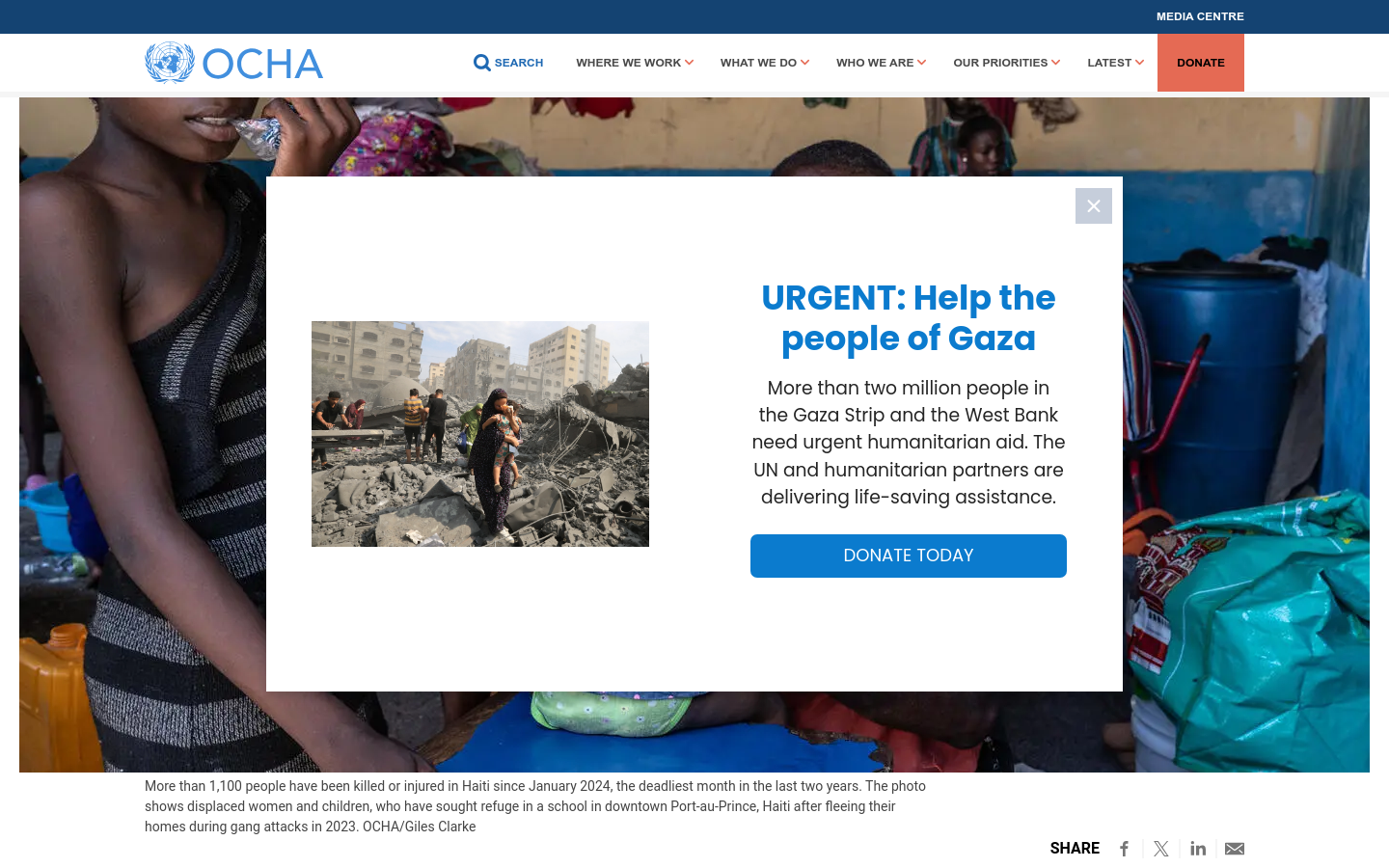
With its partners, OCHA contributes to principled and effective humanitarian response through coordination, advocacy, policy, information management and humanitarian financing tools and services.

Connecting Worlds is an App from UNHCR, the UN Refugee Agency, that facilitates meaningful connections to support the next generation of refugee students.

Oslo Governance Centre
Oslo, NorwayThe Oslo Governance Centre (OGC) is UNDPs dedicated Global Policy Centre for Governance issues. It promotes transformative governance for peaceful, just and inclusive societies.

UN Mappers is a community of mapping enthusiasts collaborating to collect, validate and disseminate geospatial open data in areas where the United Nations carries out field operations with the goal of supporting the decision-making process with more accurate location-based data.

UN General Assembly resolutions on ICTs for Sustainable Development
Geneva, SwitzerlandA UN resolution in favor of ICTs for Sustainable Development


UNDP Transparency Portal
Level 21, One United Nations Plaza, New York NY 10017Open database and map of recipients, donors