
Tag: Format > reports - (145)
Showing 145 Results

The Agentic State
TallinnLaunched at the Tallinn Digital Summit 2025, the Vision Paper maps how agentic AI systems will rewire the core functions of government — spanning public services, crisis management, governance, and procurement — and what technological, organisation, and leadership changes are needed to enable this shift.

We analyzed the case of the Colombian digital ID app (“Cédula Digital”) during the second half of 2024 and early 2025. Very little is known about its functionality, and public information about how it works is scarce.

The report assesses digital ID and government digital services in Kenya and Zambia, noting significant strides in digitisation but also persistent gaps in enforcement, capacity, and inclusivity.

Governing with Artificial Intelligence report
OECD, Rue André Pascal, Paris, FranceThe State of Play and Way Forward in Core Government Functions
From Dashboards to Data Acquisition: Charting the Social Media Monitoring Market
The George Washington University, I Street Northwest, Washington, DCBy Chris Miles with Brandon Silverman and Anna Lenhart

"In this report, we look at all multiple forms of assemblies including civic assemblies, people’s movement assemblies and governing power assemblies. We discuss the potential and limitations of each model, explore how assemblies across the board have struggled to achieve impact and durability, and discuss ways that an “equitable power-building approach” can strengthen assemblies’ impact and durability over time."

A Practical Guide to Prebunking Misinformation
New York City (NYC / New York, NY)This guide was developed for practitioners interested in defending against misleading and manipulative information

This report and framework presents a conceptual framework and a practical workbook for including public voices in artificial intelligence (AI).

There is a widely held belief that participatory grant-making can democratise philanthropy and transform power dynamics, but the evidence supporting these claims needs to be bolstered. That's why Porticus is commissioned [this] study.
How does the public feel about AI analysing UK government consultation responses?
United Kingdom of Great Britain and Northern Ireland 🇬🇧Nesta’s Centre for Collective Intelligence Design, in collaboration with the UK government’s Incubator for Artificial Intelligence, has trialled an approach to involve the public in assessing AI tools for public services.
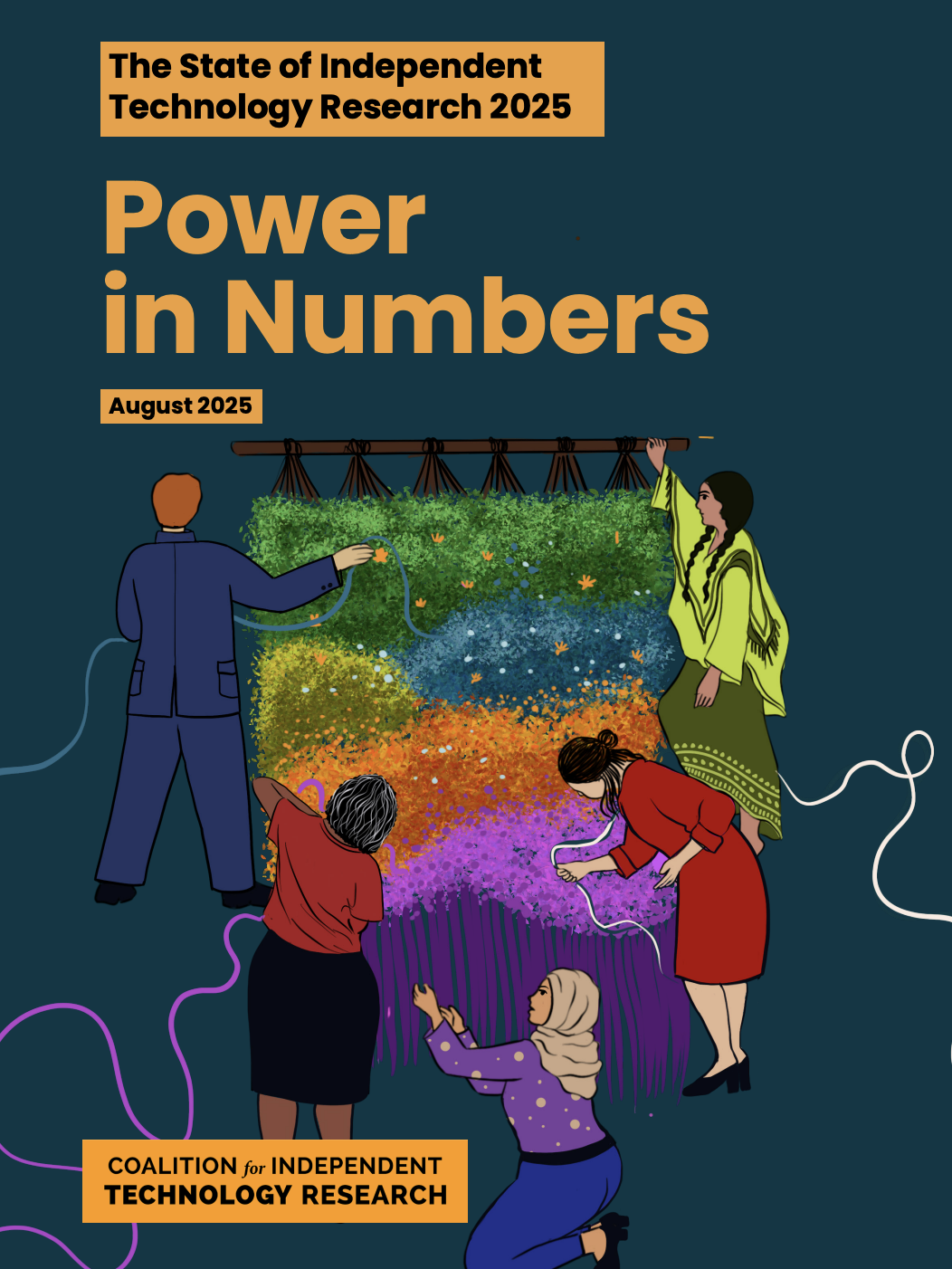
A report on the struggle to keep public-interest technology research alive—and the growing Coalition working to protect it. DOWNLOAD THE REPORT

This report scans the landscape of AI use in the public sector at the state and local level, evaluating its benefits and harms through the examples of chatbots and automated tools that transcribe audio, summarize policies, and determine eligibility for benefits.
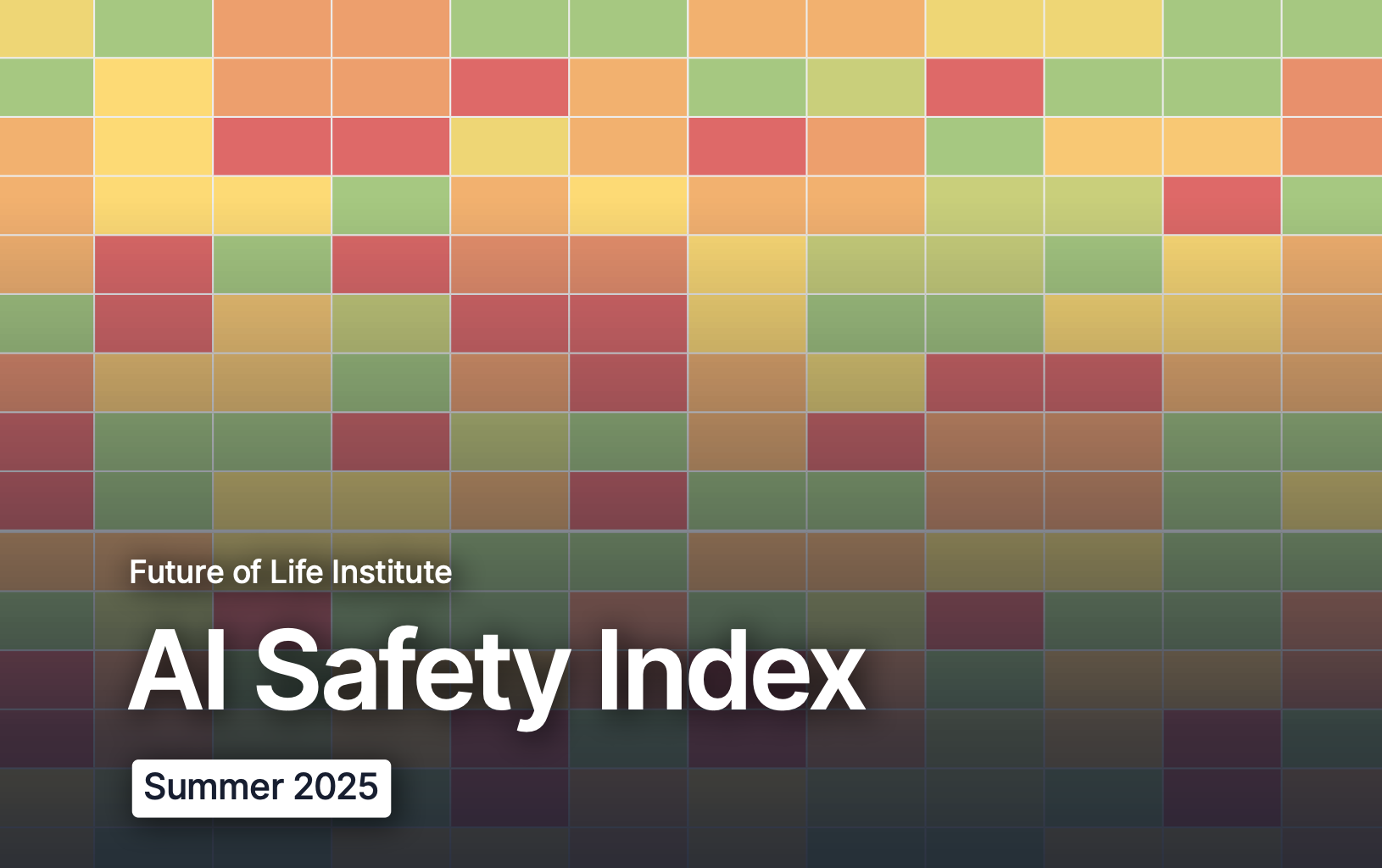
The Future of Life Institute's AI Safety Index provides an independent assessment of seven leading AI companies' efforts to manage both immediate harms and catastrophic risks from advanced AI systems.
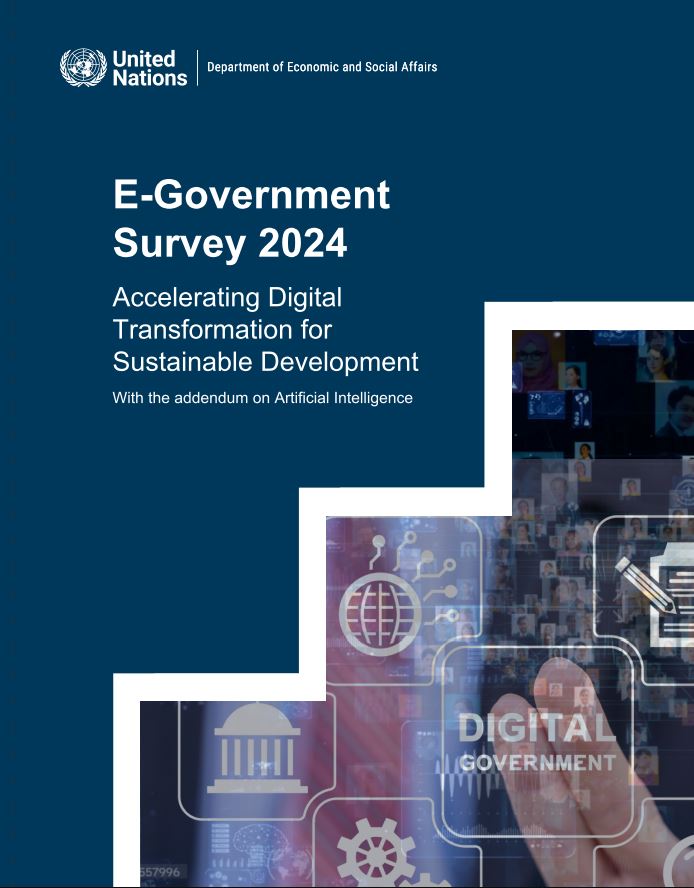
Since 2001, the United Nations E-Government Survey has provided a comprehensive assessment of the digital government landscape across all 193 Member States.

HEAT (Harmful Environmental Agendas & Tactics) is a unique cross-border investigation run by Logically and EU DisinfoLab uncovering how harmful climate narratives are deliberately seeded and amplified in Germany, France, and the Netherlands.
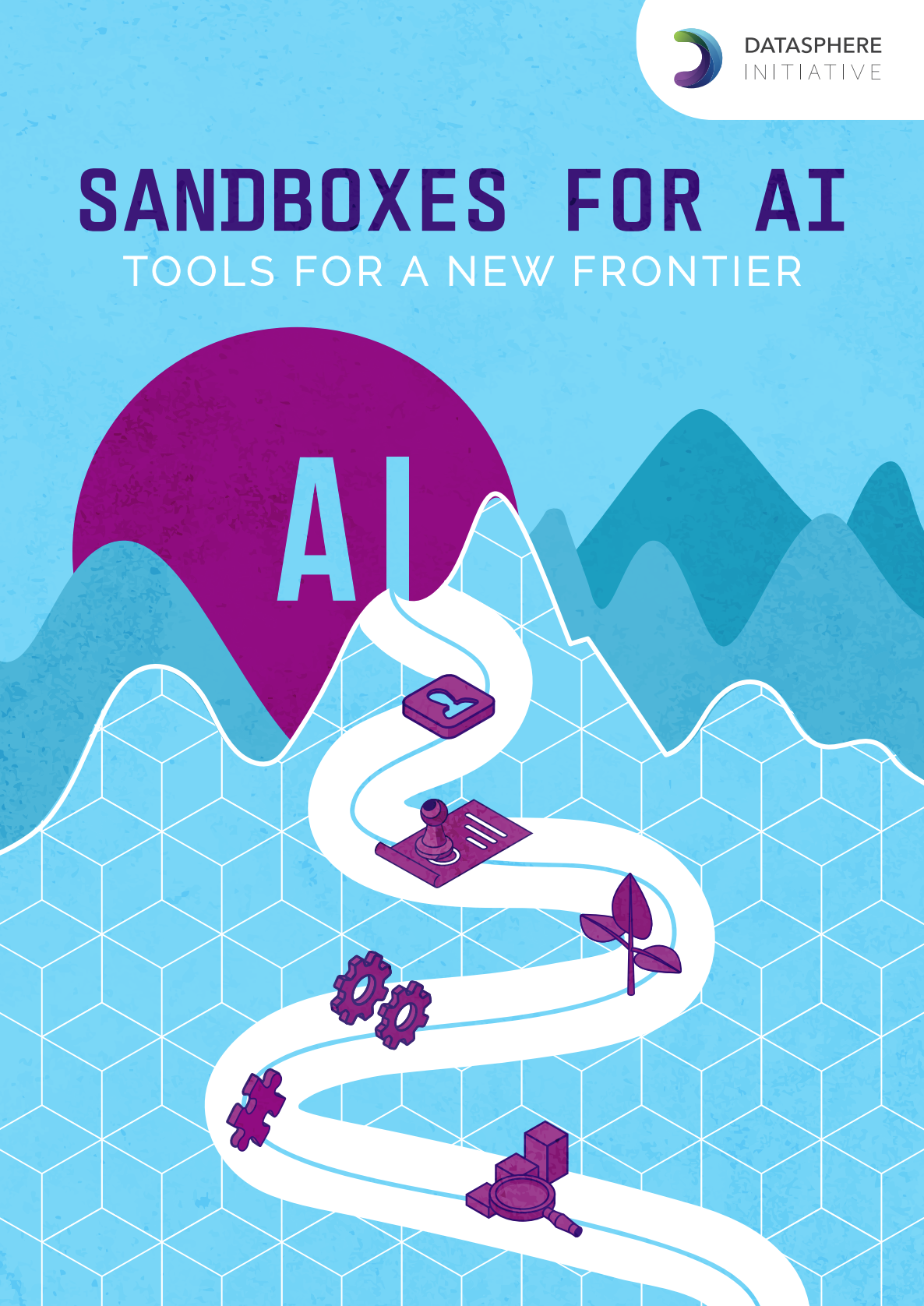
Sandboxes for AI: Tools for a New Frontier
Geneva, SwitzerlandThis report summarizes the findings of a study on sandboxes in the field of Artificial Intelligence — those that have been announced, are in development, or have been completed.
Datasphere Governance Atlas 2025
Geneva, SwitzerlandThe aim of this resource is to support the development and understanding of the data governance field by identifying and showcasing the work of actors and initiatives from around the world.
Meaningful Stakeholder Engagement in Public Procurement for Artificial Intelligence
Spain (España) 🇪🇸A playbook commissioned by Participation AI
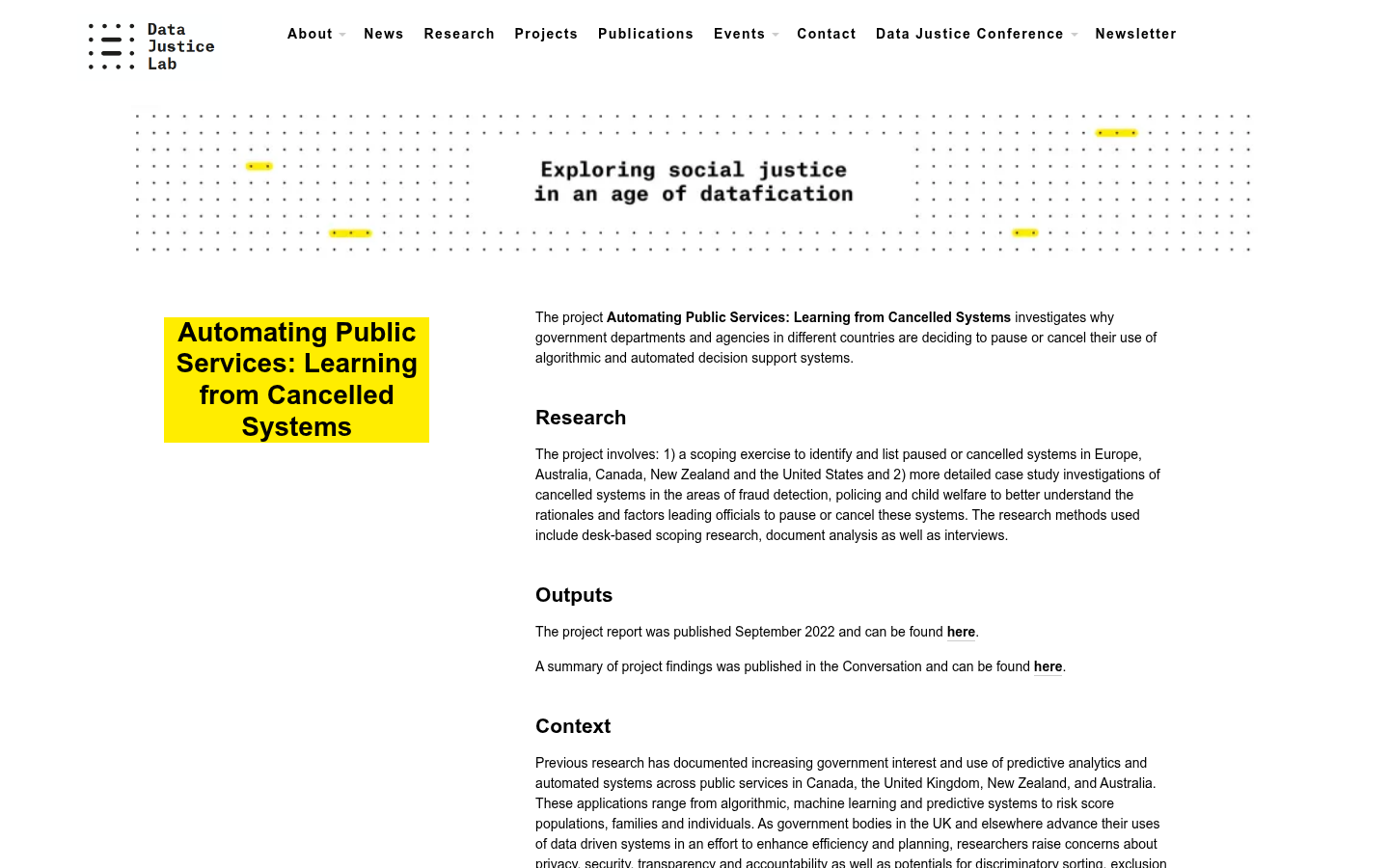
Automating Public Services: Learning from Cancelled Systems
Cardiff University, Cardiff, Wales, UKThe project Automating Public Services: Learning from Cancelled Systems investigates why government departments and agencies in different countries are deciding to pause or cancel their use of algorithmic and automated decision support systems.

Software Reuse through Open Source Software in the Public Sector
Denmark (Danmark) 🇩🇰A qualitative survey on Policy and Practice, by Johan Linåker, Sachiko Muto

State of the art and policy recommendations on how to design, implement and evaluate algorithm registers, by Soizic Pénicaud with IA Ciudadana

This report examines the implications of this new phase of activism for democracy and democracy-support strategies.

2022 Compilation report by European Democracy Hub and European Partnership for Democracy, funded by Carnegie Europe

In this paper, we examine how AI could help reimagine local government.
Boston Consulting Group report
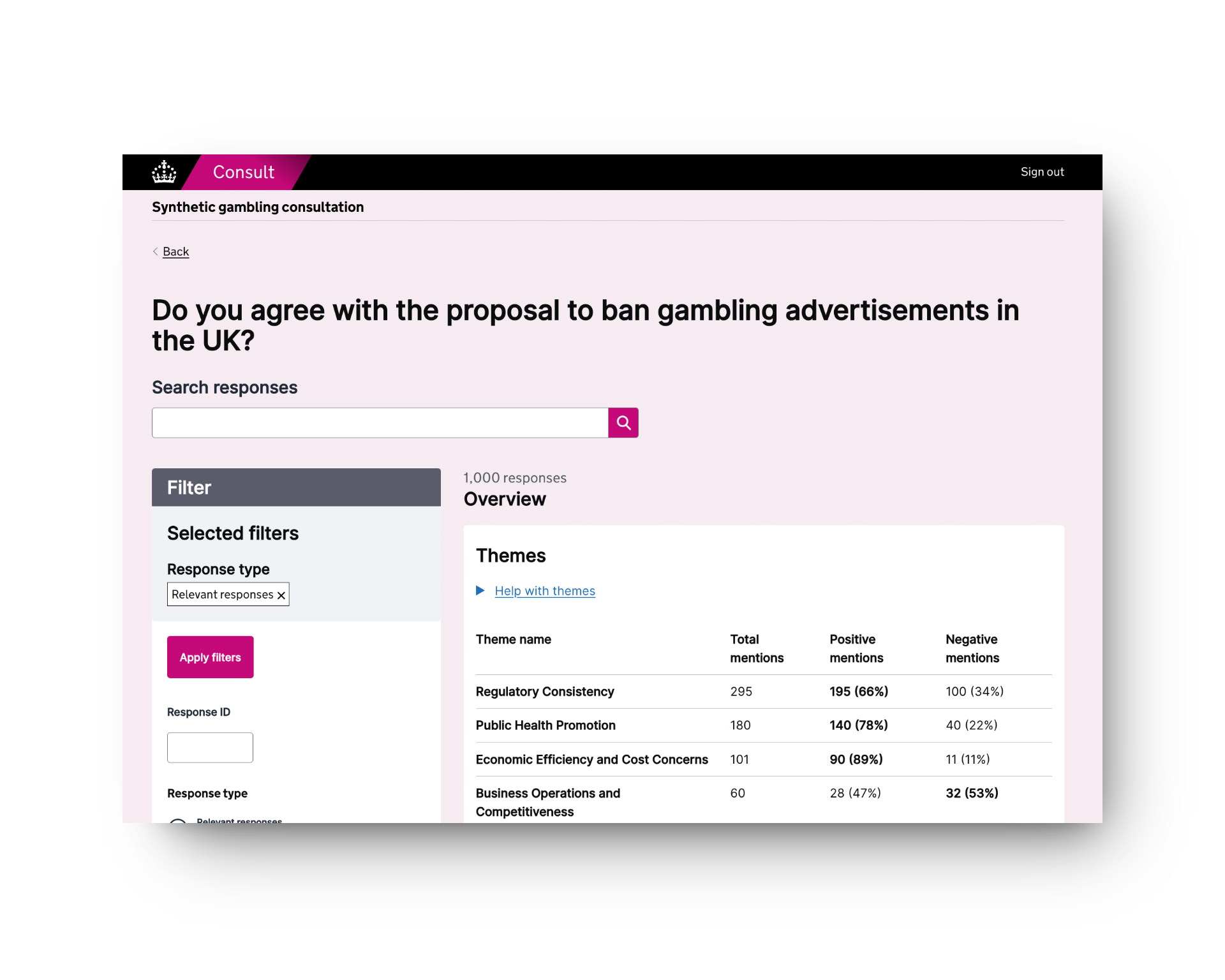
Consult Evaluation: Scottish Government’s Non-surgical cosmetic procedures consultation
10 Downing Street"Consult was generally good at identifying the themes in a given consultation response."

What Could BG Be
Bowling Green, KentuckyEngagement project with the city of Bowling Green, Kentucky

Tackling civic participation challenges with emerging technologies
OECD, Rue André Pascal, Paris, FranceThis paper offers a comprehensive examination of the role emerging digital technologies can play in improving citizen participation.

Civic Tech Project & Community Handbook
Taiwan (T'ai-wan) 🇹🇼From Taiwan’s g0v Community to the World: The Collaborative Wisdom of Digital Citizens

A $9.8 Trillion Opportunity. World Economic Forum report (2025)

Analysis of the digital democracy ecosystem
Johannesburg, South AfricaA comprehensive analysis of the digital democracy ecosystem across six regions: East Asia, Eastern Europe & Central Asia, Latin America & the Caribbean, the Middle East & North Africa (MENA), Sub-Saharan Africa, and South Asia.

Scanning the Horizon
GlobalThe report serves as an entry point to this ‘forecasting’ stream of work that organizations working in the digital rights ecosystem often overlook, especially when resources are scarce, and they are focused on current challenges and ongoing projects.

The 2022 Ranking Digital Rights Telco Giants Scorecard
740 15th Street, N.W., Suite 900 Washington, DC 20005Ranking Digital Rights's inaugural Telco Giants Scorecard reveals that telecom companies, despite being gatekeepers of the internet for most of the world, are less transparent overall and more susceptible to government demands than their Big Tech peers.

Ever wonder, “How can civic tech help improve government service delivery?” If so, check out this new research from the Canadian Digital Service! It includes 5 case studies of partnerships between the Canadian government and civic tech groups, plus tools to assess if civic tech might be a good partner for a government initiative. Find it here: https://digital.canada.ca/2025/01/23/how-can-civic-tech-help-improve-government-service-delivery/
Understanding the cyber crime and fraud victim journey
United Kingdom of Great Britain and Northern Ireland 🇬🇧This report presents findings from a qualitative study on the experiences of victims of cyber crime and fraud in England and Wales

A report by the Royal Society on the impact of the internet on our information environment, and on misinformation relating to scientific issues

How can we ensure more inclusive and responsible AI so that diverse harms can be foreseen and mitigated, and its benefits equitably enjoyed around the world?

Making TikTok, tick
United Kingdom of Great Britain and Northern Ireland 🇬🇧Using our AI-assisted research methodologies we examined more than 30,000 videos relating to mainstream political discourse in the UK

Inescapable AI
Los Angeles, CAEmploying a broad definition of AI, this report represents the first known effort to comprehensively explain and quantify the reach of AI-based decision-making among low-income people in the United States.

The How We Need Now: A Capacity Agenda For 2025 And Beyond
United States of America 🇺🇸By Jennifer Pahlka and Andrew Greenway for the Niskanen Center

“I always want to do good with my platform:” Evaluating Influencer Experiences Participating in PGP’s Influencer Programs
United States of America 🇺🇸A survey composed of 21 questions designed to collect qualitative and quantitative data on influencers' experiences working with PGP and their respective influencer-led programs.
Civic Information Index
Internews Network, 15th Street Northwest, Washington, DCThe Civic Information Index uses data to map drivers of engaged, informed, equitable, and healthy communities nationwide.

Paper by Joy Aceron, 2019. This paper explains why and how a reform program that opened up spaces for participatory budgeting was ultimately unable to result in pro-citizen power shifts that transformed governance.

Leveraging AI for Democracy: Civic Innovation on the New Digital Playing Field
1025 F Street NW, Suite 800, Washington, DC 200043 essays by Beth Kerley, Carl Miller, and Fernanda Campagnucci outline possible paths toward a prodemocratic vision for AI

Automating (In)Justice: An Adversarial Audit of RisCanvi
Catalonia (Spain)Eticas Foundation's adversarial audit of an AI-powered criminal justice tool, RisCanvi, that has been used in Catalonia since 2009 finds it "does not meet the required standards of reliability and fairness."

Open Government for Stronger Democracies
OECD, Rue André Pascal, Paris, FranceAn OECD global assessment of countries' implementation of its 2017 Recommendation on Open Government
Public Data Access Programs - A First Look
Washington, DCThe EU’s Digital Services Act mandates greater researcher data access from platforms; Mozilla and the National Conference on Citizenship investigated 19 platforms’ responses

Privacidad es seguridad
Lima, PeruEn los últimos quince años, los peruanos hemos renunciado a muchos aspectos de nuestra privacidad en nombre de la seguridad. ¿Ha valido la pena?

In the period between the beginning of 2021 and the middle of 2022, we investigated open-source digital infrastructures used by communities that are under the constant threat of violation of civil and environmental rights.