Towards psychological herd immunity: Cross-cultural evidence for two prebunking interventions against COVID-19 misinformation
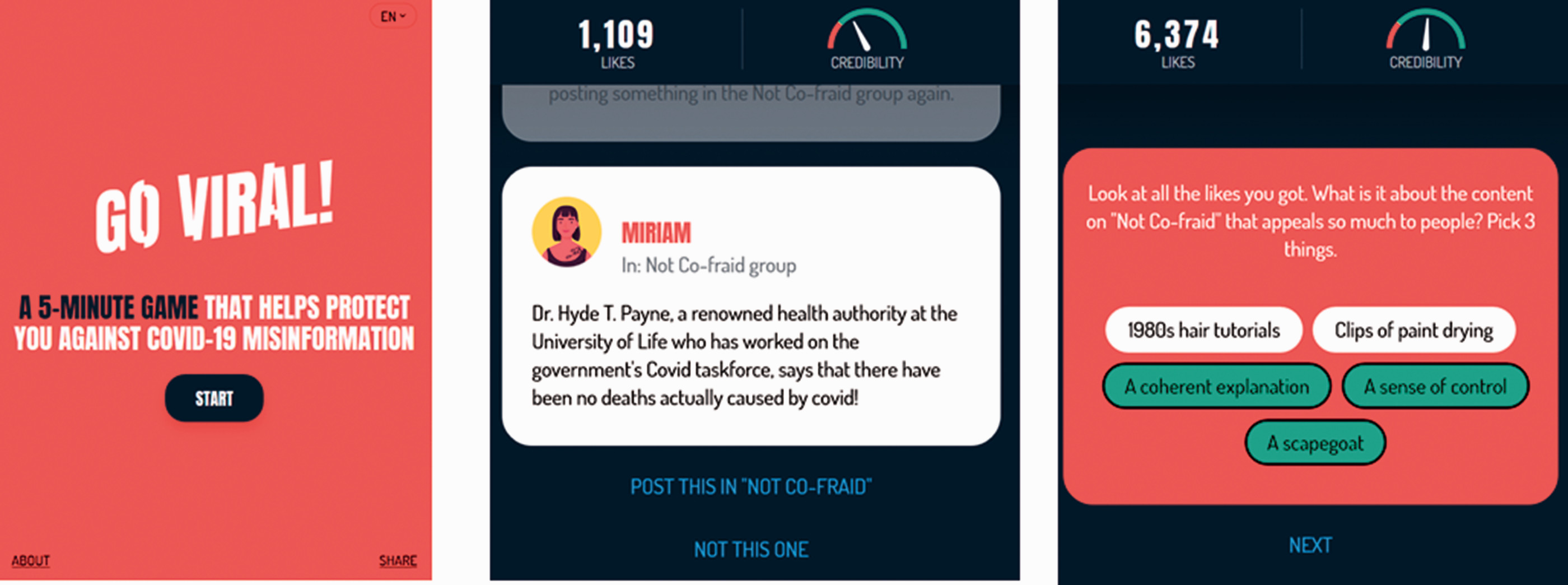
Misinformation about the novel coronavirus (COVID-19) is a pressing societal challenge. Across two studies, one preregistered (n1 = 1771 and n2 = 1777), we assess the efficacy of two ‘prebunking’ interventions aimed at improving people’s ability to spot manipulation techniques commonly used in COVID-19 misinformation across three different languages (English, French and German). We find that Go Viral!, a novel five-minute browser game, (a) increases the perceived manipulativeness of misinformation about COVID-19, (b) improves people’s attitudinal certainty (confidence) in their ability to spot misinformation and (c) reduces self-reported willingness to share misinformation with others. The first two effects remain significant for at least one week after gameplay. We also find that reading real-world infographics from UNESCO improves people’s ability and confidence in spotting COVID-19 misinformation (albeit with descriptively smaller effect sizes than the game). Limitations and implications for fake news interventions are discussed.
Melisa Basol, Jon Roozenbeek, Manon Berriche, Fatih Uenal, William P. McClanahan, Sander van der Linden, 2021
Parent organization: