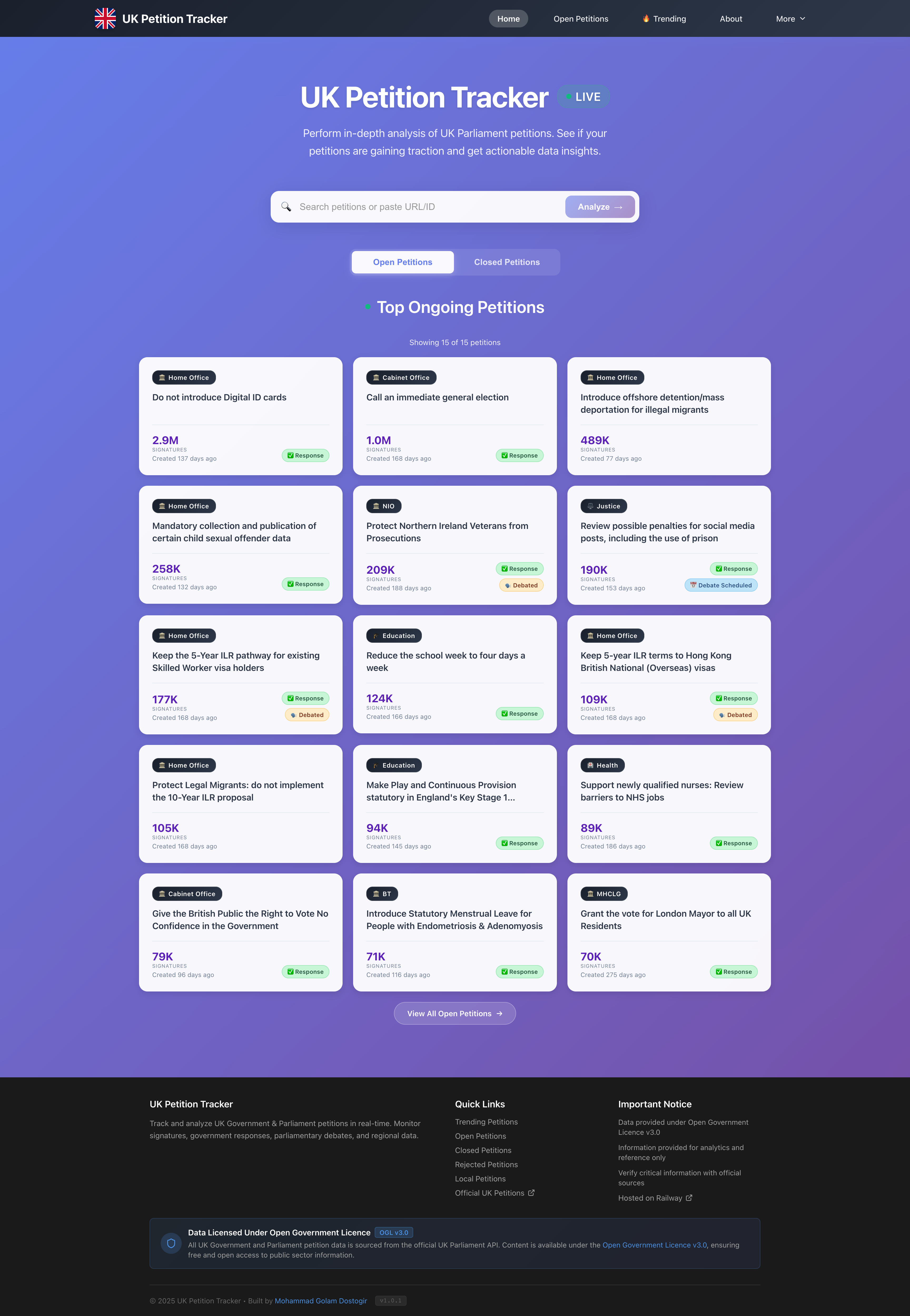
UK Petition Tracker Claimed
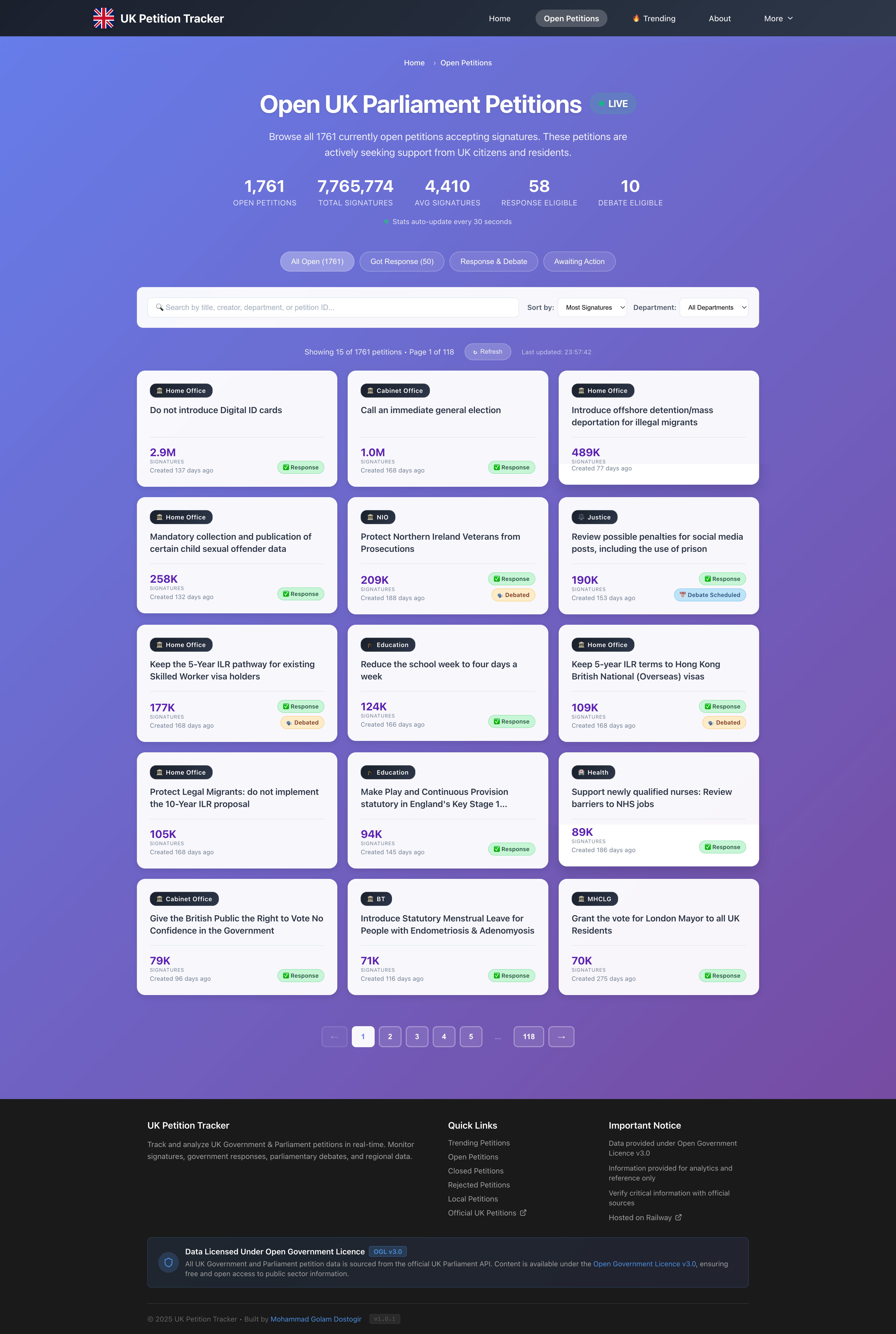
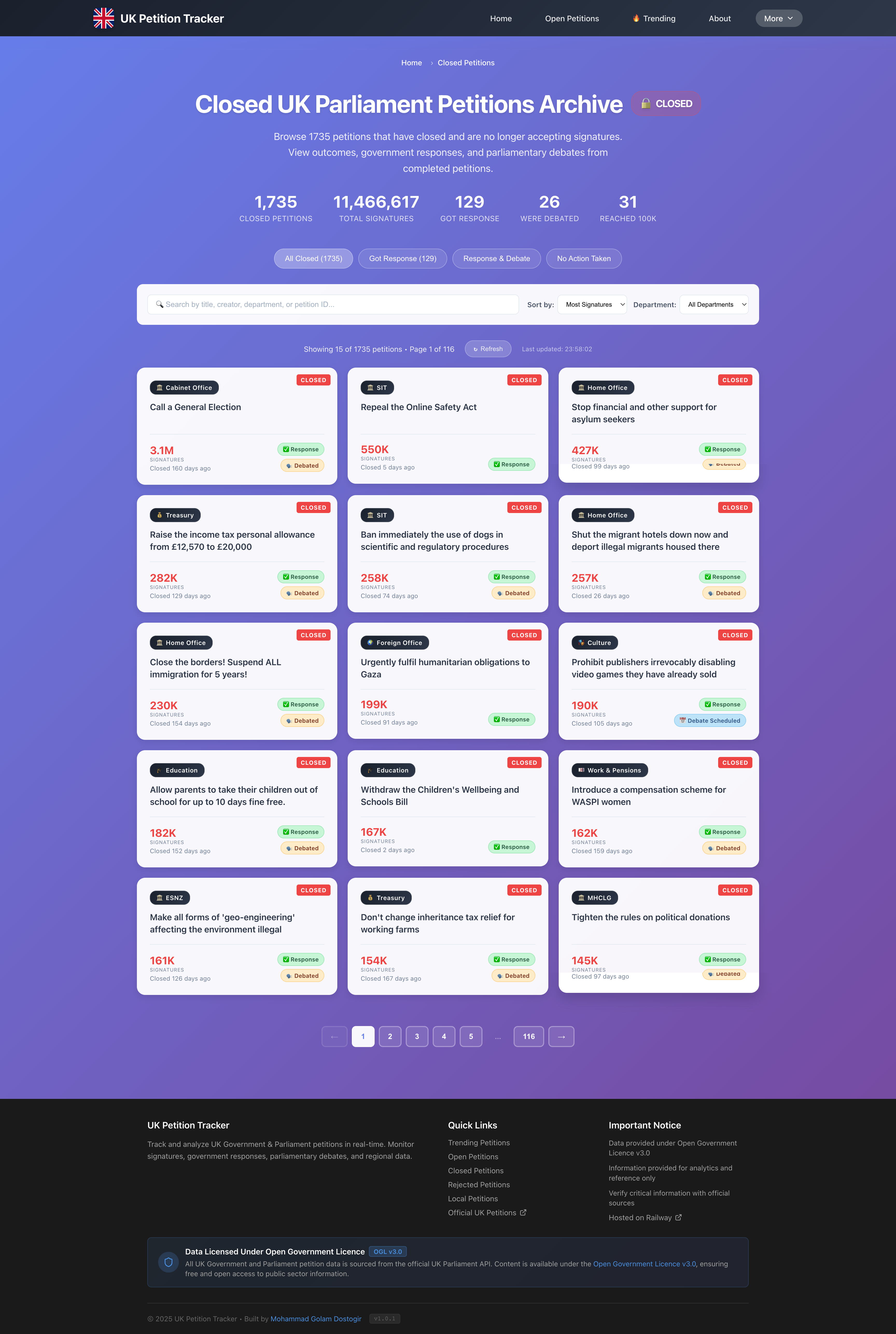
UK Petition Tracker is a real-time analytics platform for UK Parliament petitions — transforming official data into actionable insights for citizens, journalists, and researchers.
While the UK Parliament provides open petition data through its API, it lacks comprehensive visualization and live tracking. UK Petition Tracker bridges that gap, converting raw datasets into interactive dashboards that reveal patterns in civic engagement and democratic participation.
How It Began: This project began as a personal initiative by Mohammad Golam Dostogir (myself), a software engineer passionate about civic technology and open data. Recognizing that parliamentary petition data was technically available but not easily understandable, he set out to build a transparent, user-friendly system for everyone — from curious citizens to data professionals.
Who It’s For: Citizens who want to monitor issues gaining traction in Parliament. Journalists and researchers who analyze public sentiment and civic engagement. Developers and data scientists who want accessible, structured, and exportable datasets.
Why It’s Different: -Forever Free & Ad-Free: No subscriptions, no ads, no tracking — built purely as a public service.
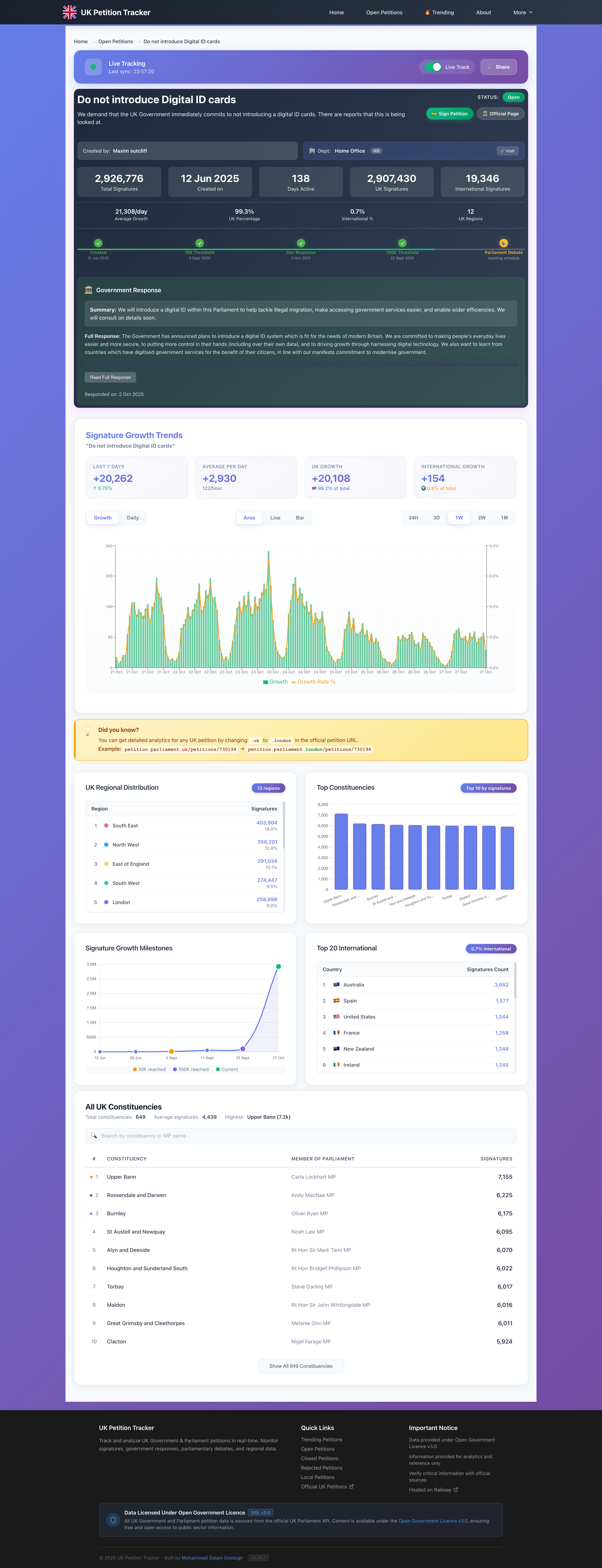
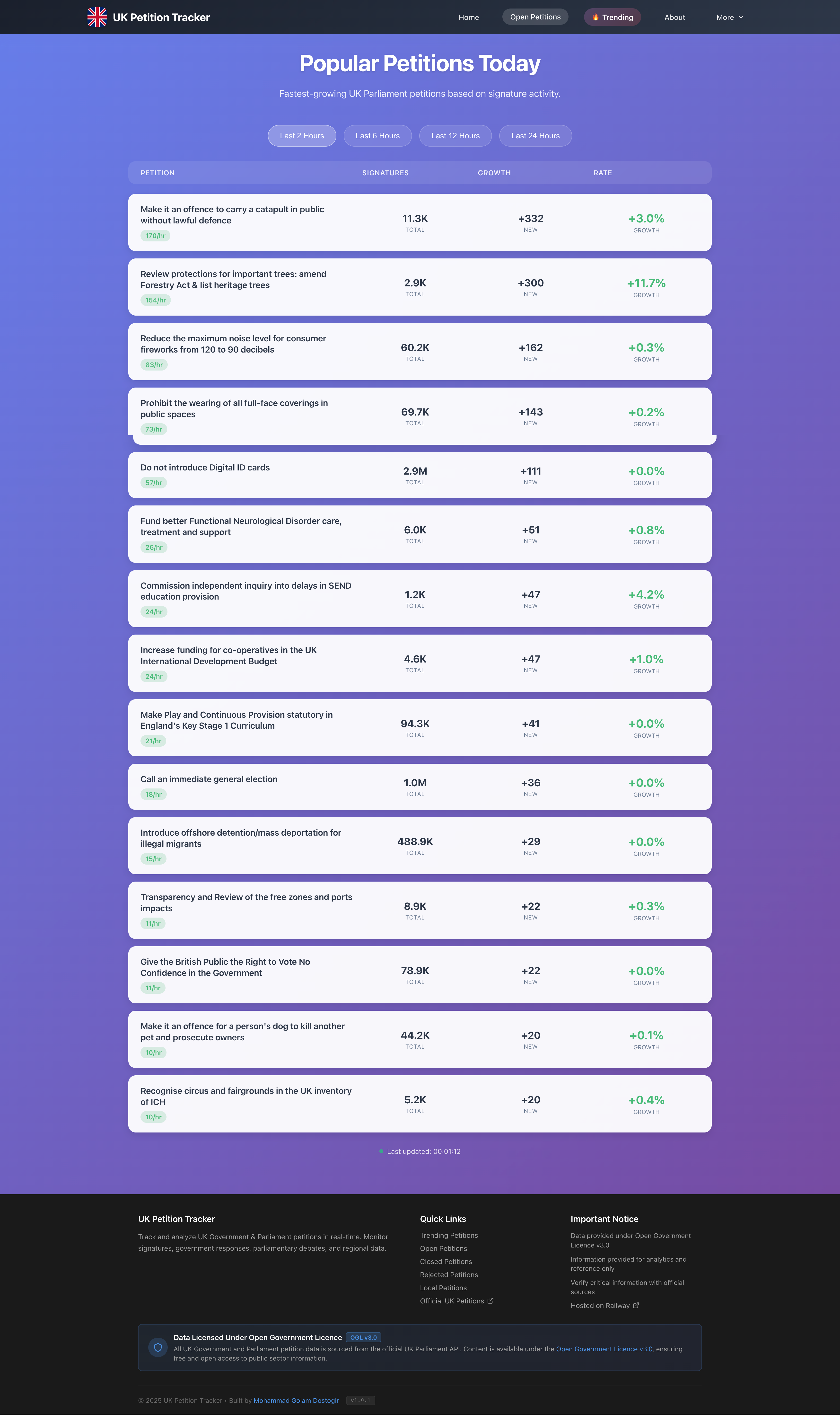
-Comprehensive Analytics: Hourly time-series data, signature velocity analysis, and historical trends unavailable elsewhere.
-Real-Time Monitoring: 5-second refresh intervals during peak activity with intelligent caching for accuracy and performance.
-Deep Data Insights: Constituency-level and regional analytics, including international signature tracking and downloadable data formats.
-Professional Development: Designed and maintained by a full-stack engineer with over 8 years of production experience, ensuring reliability, performance, and continuous improvement.
UK Petition Tracker helps people understand and engage with UK parliamentary petitions through real-time data and easy-to-read analytics. It allows citizens to follow petitions that matter to them and see how support grows across regions. Researchers and journalists can access detailed, exportable data for deeper analysis and reporting, while students and educators can use the platform to study civic participation and data-driven democracy. In short, it transforms complex petition data into actionable insights that anyone can explore and learn from.
Founders:
Mohammad Golam Dostogir
Contact UK Petition Tracker